NIHSS i Tromboliza: Procena Eligibilnosti kod Akutnog Ishemijskog Moždanog Udara
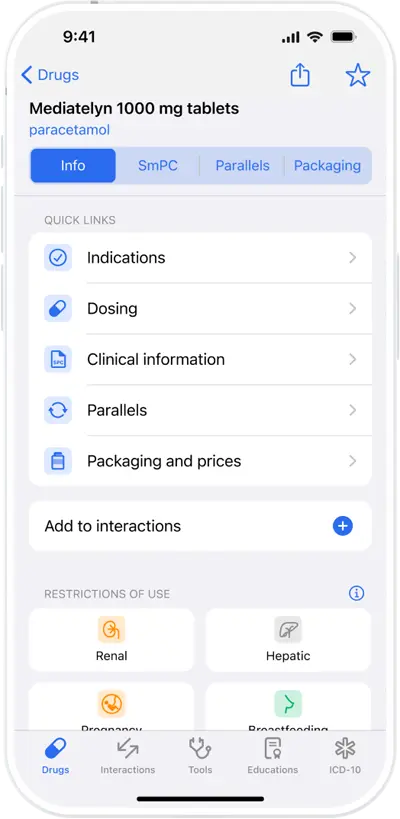
NIHSS skor predstavlja jedan od ključnih parametara pri razmatranju indikacija za intravensku primenu alteplaze (rtPA) kod akutnog ishemijskog moždanog udara. Vrednosti skale utiču na kliničku odluku u okviru terapijskog prozora i koriste se paralelno sa neuroimaging nalazima, vremenom nastanka simptoma i prisustvom kontraindikacija. Mediately platforma pruža pristup digitalnom NIHSS alatu za strukturisanu procenu u akutnom kliničkom okruženju.
Vrednosti NIHSS skora se razmatraju u kontekstu sledećih kliničkih pragova:
NIHSS skor
Klinički kontekst razmatranja
0-3
Blagi deficit; odluka o trombolizi zahteva pažljivu individualnu procenu u skladu sa smernicama
4-22
Opseg u kome se tromboliza generalno razmatra kada su ispunjeni ostali kriterijumi eligibilnosti
Vise od 22
Visoki NIHSS; povišen rizik od simptomatske intrakranijalne hemoragije; tromboliza nije apsolutno kontraindikovana u trozasatnom prozoru, ali zahteva poseban oprez
Napomena: NIHSS skor sam po sebi nije jedini determinator eligibilnosti. Konsultujte aktuelne ESO i AHA/ASA smernice za potpunu listu kriterijuma i kontraindikacija za primenu alteplaze.
Vremenski Prozor i Značaj Brzine Procene
Efikasnost intravenske trombolize direktno zavisi od brzine primene. U standardnom trozasatnom prozoru, svaka minuta kašnjenja nosi gubitak neurona koji je klinički značajan. U produženom prozoru od 3 do 4,5 sata, NIHSS skor iznad 25 smatra se jednim od ograničavajućih faktora prema smernicama.
Digitalni NIHSS kalkulator na Mediately platformi strukturiše procenu korak po korak i automatski prikazuje ukupni skor, što podržava brz i sistematičan pregled bez propuštanja stavki.
Procena u Okviru Kompletnog Trijažnog Protokola
NIHSS skor se primenjuje zajedno sa:
Neuroimaging studijama (CT bez kontrasta za isključivanje intrakranijalne hemoragije, CT/MR angiografijom za prikaz okluzije)
Tačnim beležanjem vremena nastanka simptoma ili poslednjeg poznatog normalnog stanja
Procenom kontraindikacija prema aktuelnim smernicama
NIHSS — procena težine moždanog udara
NIH Stroke Scale — neurološka procena akutnog ishemijskog moždanog udara
No stroke symptoms
0
1. a) Level of Consciousness
Alert; keenly responsive
The investigator must choose a response if a full evaluation is prevented by such obstacles as an endotracheal tube, language barrier, orotracheal trauma/bandages. A 3 is scored only if the patient makes no movement (other than reflexive posturing) in response to noxious stimulation.
1. b) Ask for the current month and his/her age
Both questions correct
The answer must be correct - there is no partial credit for being close. It is important that only the initial answer be graded and that the examiner not "help" the patient with verbal or non-verbal cues.
1. c) Ask to blink eyes and squeeze hands
Performs both tasks correctly
Substitute another one step command if the hands cannot be used. Credit is given if an unequivocal attempt is made but not completed due to weakness. If the patient does not respond to command, the task should be demonstrated to him or her (pantomime), and the result scored (i.e., follow s none, one or two commands). Patients with trauma, amputation, or other physical impediments should be given suitable one-step commands. Only the first attempt is scored.
2. Test horizontal extraocular movements
Normal
If a patient has an isolated peripheral nerve paresis(CN III, IV or VI), score a 1. Gaze is testable in all aphasic patients. Patients with ocular trauma, bandages, pre-existing blindness, or other disorder of visual acuity or fields should be tested with reflexive movements, and a choice made by the investigator. Establishing eye contact and then moving about the patient from side to side will occasionally clarify the presence of a partial gaze palsy.
3. Test visual fields
No visual loss
Visual fields (upper and lower quadrants) are tested by confrontation, using finger counting or visual threat, as appropriate. Patients may be encouraged, but if they look at the side of the moving fingers appropriately, this can be scored as normal. If there is unilateral blindness or enucleation, visual fields in the remaining eye are scored. Score 1 only if a clear-cut asymmetry, including quadrantanopia, is found.
4. Test facial palsy
Normal (symmetrical movements)
Ask – or use pantomime to encourage – the patient to show teeth or raise eyebrows and close eyes. Score symmetry of grimace in response to noxious stimuli in the poorly responsive or non-comprehending patient. If facial trauma/bandages, orotracheal tube, tape or other physical barriers obscure the face, these should be removed to the extent possible.
5. a) Test left arm motor drift
No drift for 10 Seconds
The limb is placed in the appropriate position: extend the arms (palms down) 90 degrees (if sitting) or 45 degrees (if supine). Drift is scored if the arm falls before 10 seconds. The aphasic patient is encouraged using urgency in the voice and pantomime, but not noxious stimulation. Each limb is tested in turn, beginning with the non-paretic arm. Only in the case of amputation or joint fusion at the shoulder, the examiner should record the score as untestable (UN).
5. b) Test right arm motor drift
No drift for 10 Seconds
The limb is placed in the appropriate position: extend the arms (palms down) 90 degrees (if sitting) or 45 degrees (if supine). Drift is scored if the arm falls before 10 seconds. The aphasic patient is encouraged using urgency in the voice and pantomime, but not noxious stimulation. Each limb is tested in turn, beginning with the non-paretic arm. Only in the case of amputation or joint fusion at the shoulder, the examiner should record the score as untestable (UN).
6. a) Test left leg motor drift
No drift for 5 seconds
The limb is placed in the appropriate position: hold the leg at 30 degrees (always tested supine). Drift is scored if the leg falls before 5 seconds. The aphasic patient is encouraged using urgency in the voice and pantomime, but not noxious stimulation. Each limb is tested in turn, beginning with the non-paretic leg. Only in the case of amputation or joint fusion at the hip, the examiner should record the score as untestable (UN), and clearly write the explanation for this choice.
6. b) Test right leg motor drift
No drift for 5 seconds
The limb is placed in the appropriate position: hold the leg at 30 degrees (always tested supine). Drift is scored if the leg falls before 5 seconds. The aphasic patient is encouraged using urgency in the voice and pantomime, but not noxious stimulation. Each limb is tested in turn, beginning with the non-paretic leg. Only in the case of amputation or joint fusion at the hip, the examiner should record the score as untestable (UN), and clearly write the explanation for this choice.
7. Test limb ataxia
No ataxia
This item is aimed at finding evidence of a unilateral cerebellar lesion. Test with eyes open. In case of visual defect, ensure testing is done in intact visual field. The finger-nose-finger and heel-shin tests are performed on both sides, and ataxia is scored only if present out of proportion to weakness. In case of blindness, test by having the patient touch nose from extended arm position.
8. Test sensation
Normal (no sensory loss)
Sensation or grimace to pinprick when tested, or withdrawal from noxious stimulus in the obtunded or aphasic patient. Only sensory loss attributed to stroke is scored as abnormal and the examiner should test as many body areas (arms [not hands], legs, trunk, face) as needed to accurately check for hemisensory loss.
9. Test language
No aphasia; normal
If visual loss interferes with the tests, ask the patient to identify objects placed in the hand, repeat, and produce speech. The intubated patient should be asked to write. The examiner must choose a score for the patient with stupor or limited cooperation, but global aphasia answer should be used only if the patient is mute and follows no one-step commands.
10. Test dysarthria
Normal
If patient is thought to be normal, an adequate sample of speech must be obtained by asking patient to read or repeat words. If the patient has severe aphasia, the clarity of articulation of spontaneous speech can be rated. Only if the patient is intubated or has other physical barriers to producing speech, the examiner should record the score as untestable. Do not tell the patient why he or she is being tested.
11. Test extinction and inattention
No abnormality
Sufficient information to identify neglect may be obtained during the prior testing. If the patient has a severe visual loss preventing visual double simultaneous stimulation, and the cutaneous stimuli are normal, the score is normal. If the patient has aphasia but does appear to attend to both sides, the score is normal. The presence of visual spatial neglect or anosagnosia may also be taken as evidence of abnormality. Since the abnormality is scored only if present, the item is never untestable.
Kada Primeniti NIHSS u Kontekstu Trombolize
Odmah po prijemu pacijenta sa simptomima akutnog moždanog udara, pre uzimanja uzoraka krvi i pre CT snimanja kada je moguće
Posle primene trombolize, u standardnim vremenskim tačkama (2 sata, 24 sata) radi praćenja neurološkog odgovora na terapiju
Pri dokumentovanju kliničkog statusa kao dela obavezne medicinske dokumentacije u jedinici za moždani udar
U slučaju razmatranja mehaničke trombektomije, gde NIHSS skor dopunjuje neuroimaging kriterijume selekcije pacijenata
Ograničenja
NIHSS skor nije samostalni kriterijum za trombolizu; eligibilnost se procenjuje multifaktorski.
Niske vrednosti NIHSS (1-3) ne isključuju razmatranje trombolize kod pacijenata sa onesposobljavajućim deficitom.
Visoki NIHSS skor ne sme biti jedini razlog za isključivanje pacijenta bez prethodne individualne analize kliničke slike.
Primena skale od strane neuvežbanih ispitivača može uvesti grešku merenja; standardizovana obuka poboljšava pouzdanost.
Često Postavljana Pitanja
Da li se NIHSS primenjuje kod hemoragijskog moždanog udara?
NIHSS je razvijen primarno za procenu ishemijskog moždanog udara. Primenjuje se i kod intrakranijalne hemoragije za praćenje neurološkog statusa, ali tromboliza nije indicirana u tom kontekstu. Konsultujte specifične smernice za intracerebralni hematom i subarahnoidalnu hemoragiju.
Koji prag NIHSS skora je relevantan za mehaničku trombektomiju?
Smernice ne definišu fiksni NIHSS prag za trombektomiju; odluka se zasniva na kombinaciji NIHSS skora, neuroimaging nalaza (ASPECTS skor, prikaz okluzije velikih sudova), vremena nastanka i kliničkog stanja. Pristupite aktuelnim ESO smernicama za trombektomiju za detaljan algoritam selekcije.
Koliko često se NIHSS meri posle trombolize?
Posttrombolitičko praćenje uključuje procenu NIHSS pri 2 sata, 24 sata i pred otpust kao minimum, uz dodatne procene pri svakoj promeni kliničkog statusa. Lokalni protokoli Vaše ustanove mogu propisivati i češće merenje.
Koristimo kolačiće
Kolačići nam pomažu da pružimo najbolje iskustvo na našoj veb stranici. Korišćenjem naše veb stranice saglasni ste sa upotrebom kolačića. Više o tome kako koristimo kolačiće saznajte u našoj Politici kolačića.